
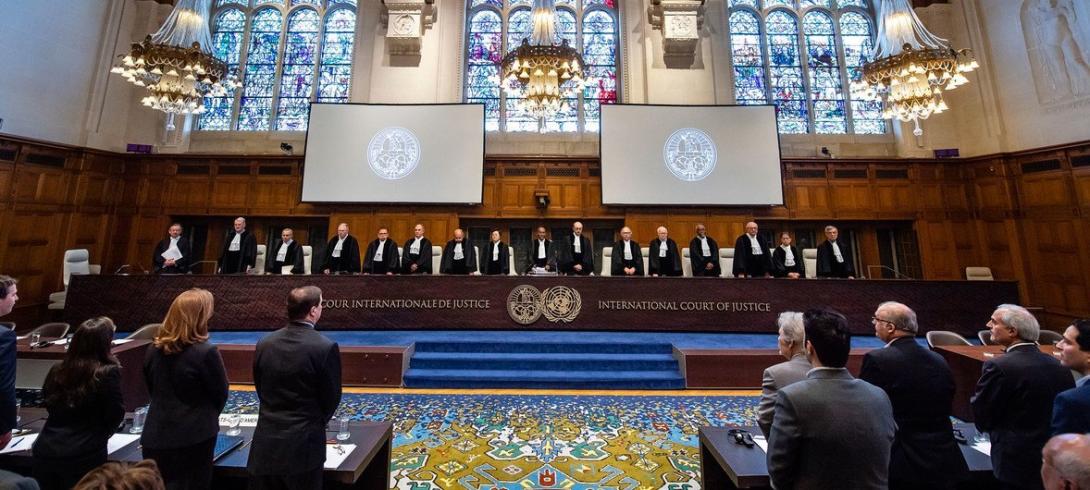
On December 2nd, the International Court of Justice (ICJ), the UN's highest court, began proceedings to examine states' legal obligations in the fight against climate change and subsequently issue a ruling. This is the largest case in the history of the court, based in The Hague, and was initiated by Vanuatu, a small island nation in the South Pacific, which requested an advisory opinion to clarify countries' responsibilities in the face of the climate crisis. The proceedings, which will last two weeks, will involve 110 countries and organizations.
After years of pressure from island nations, which fear disappearing due to rising sea levels, the UN General Assembly requested the ICJ's ruling last year. Vanuatu, responsible for only 0.02% of global greenhouse gas emissions, denounced the climate emergency as threatening its very existence due to the "illegal" conduct of a "small group of" polluting countries.
The Court is expected to issue its ruling next year. Although it is not legally binding, it will carry significant political weight and set the stage for further legal action, including climate litigation at the national level.
Learn more here
On December 2nd, the International Court of Justice (ICJ), the UN's highest court, began proceedings to examine states' legal obligations in the fight against climate change and subsequently issue a ruling. This is the largest case in the history of the court, based in The Hague, and was initiated by Vanuatu, a small island nation in the South Pacific, which requested an advisory opinion to clarify countries' responsibilities in the face of the climate crisis. The proceedings, which will last two weeks, will involve 110 countries and organizations.
After years of pressure from island nations, which fear disappearing due to rising sea levels, the UN General Assembly requested the ICJ's ruling last year. Vanuatu, responsible for only 0.02% of global greenhouse gas emissions, denounced the climate emergency as threatening its very existence due to the "illegal" conduct of a "small group of" polluting countries.
The Court is expected to issue its ruling next year. Although it is not legally binding, it will carry significant political weight and set the stage for further legal action, including climate litigation at the national level.
Learn more here