
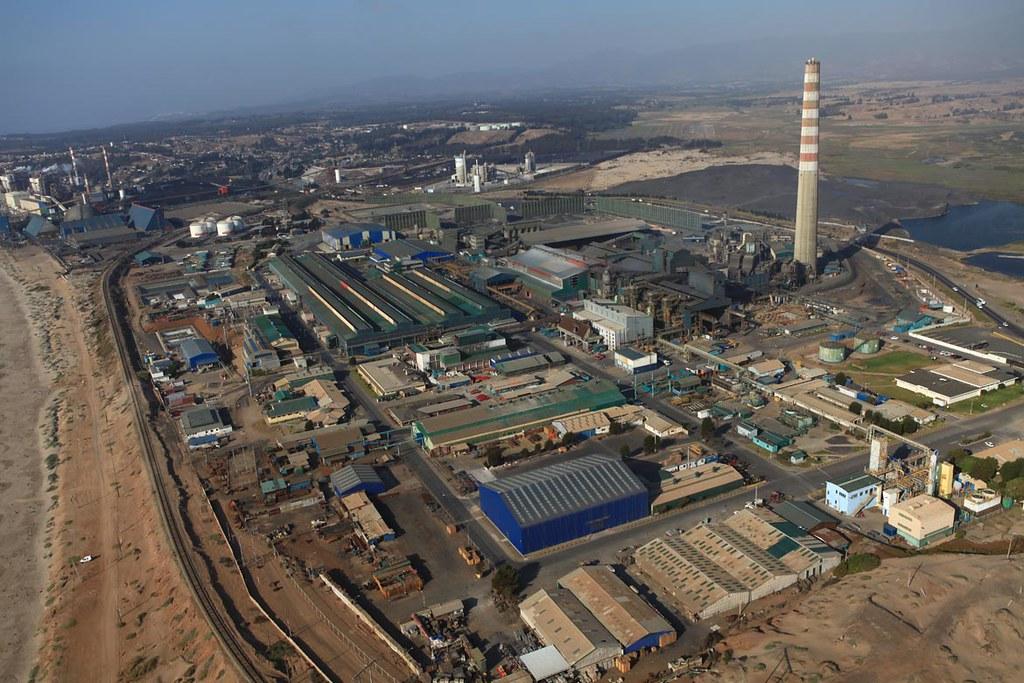
About two hours from Santiago, the capital of Chile, lies the bay of Quintero and Puchuncaví, with just over 40,000 inhabitants. The area had the potential to be a wonderful place to live—with its rich agriculture and bountiful sea—offering artisanal fishing and opportunities to develop tourism. But these ways of life were sacrificed to the relentless advance of intensive industrial activity. Today, more than 30 different companies, many highly polluting, operate there, making it a dangerous place to live.
Mass poisonings of adults and young people are common in the bay , often resulting in hospitalization. Coal spills on the beaches, staining the sand, are also frequent. In 2022 alone, over 100 such incidents were recorded . While not officially documented, there is even more chilling evidence of the dire situation of the local population. Many children require specialized education due to developmental or learning difficulties, and nearly every resident has a loved one suffering from cancer or other illnesses linked to pollution exposure.
The situation disproportionately affects children, who are especially vulnerable to pollution. The impact on women is also significant, as they are often forced to leave their jobs to care for sick family members.
The effects of the energy transition
The energy transition process in Chile is part of the context of what is happening in the bay. For many years, the country obtained more than 50% of its energy from coal-fired power plants. But that is changing, as dependence on fossil fuels (which Chile must import) is giving way to the use of solar, wind, and other renewable energy sources.
All of this has direct consequences for the area. Following the Decarbonization Plan implemented by the government in 2019, two of the four AES Andes thermoelectric plants operating in the bay were shut down. But what will happen to the other two that still don't have a closure date? And what about the environmental damage left behind by those that have already closed? It's time to talk about restoring the area to achieve justice for the region.
The uprising of the communities
In 2016, a group of people, supported by the environmental advocacy organization Environmental Defense, filed a lawsuit for environmental damage against the government and all the companies operating in the area. Only this year, seven years later, did the legal process culminate in a verdict. This long-awaited decision will be a turning point in the lives of all those who bravely stood up to bring to light the injustice they have suffered.
Meanwhile, in 2019, the Supreme Court resolved several legal appeals for protection following mass poisoning incidents, ruling in favor of the communities and issuing a landmark ruling —perhaps the most important environmental decision in Chile. The ruling orders the State to implement 15 measures to identify the sources of contamination and remediate the environmental damage in the area. Sadly, the ruling has not yet been properly implemented.
Continuing with the progress, the Supreme Court recently issued three rulings addressing the non-compliance with the 2019 judgment and providing tools to enforce it. But much remains to be done.
So what now?
The Quintero-Puchuncaví case and the numerous lawsuits that have arisen in the area demonstrate the importance of law and litigation as tools for people to access justice. Strategic litigation, whether climate-related or environmental, is not easy and is not always the best available option for achieving a goal. In fact, it is a costly option that requires time and dedication.
But it is also a key tool for advancing justice. Specifically, it allows communities to bring their demands to formal decision-making forums. In the case of Quintero and Puchuncaví, the Supreme Court has repeatedly recognized the environmental problem and human rights violations affecting the area and has ordered the State to take urgent measures to correct the situation. Faced with a lack of ambition, or the direct violation of rights by States or companies, it has been the courts, at the request of those affected, that have compelled the government to take a stand on the side of responsibility.
Justice will come, if we give it the chance.
The town of Quintero and Puchuncaví deserves the opportunity to shine again and reach its full potential as a colorful coastal town and resort rich in natural resources.
The injustice inflicted upon the territory and its inhabitants must be acknowledged, establishing mechanisms for redress, ensuring non-repetition, and involving local people in the area's environmental recovery. It is also crucial that the energy transition be closely monitored to ensure it is not only a transition, but a just one.
All of this can be supported by the use of national and international law and litigation. Thus, as a civil society organization specializing in the use of law and litigation, AIDA will continue to be part of the tremendous multidisciplinary effort needed to help communities regain their agency—the power to decide and participate in the decisions that affect them, a power that was taken from them so many years ago.
Text written by Florencia Ortúzar Greene, director of the Climate Program of the Inter-American Association for Environmental Defense (AIDA)
About two hours from Santiago, the capital of Chile, lies the bay of Quintero and Puchuncaví, with just over 40,000 inhabitants. The area had the potential to be a wonderful place to live—with its rich agriculture and bountiful sea—offering artisanal fishing and opportunities to develop tourism. But these ways of life were sacrificed to the relentless advance of intensive industrial activity. Today, more than 30 different companies, many highly polluting, operate there, making it a dangerous place to live.
Mass poisonings of adults and young people are common in the bay , often resulting in hospitalization. Coal spills on the beaches, staining the sand, are also frequent. In 2022 alone, over 100 such incidents were recorded . While not officially documented, there is even more chilling evidence of the dire situation of the local population. Many children require specialized education due to developmental or learning difficulties, and nearly every resident has a loved one suffering from cancer or other illnesses linked to pollution exposure.
The situation disproportionately affects children, who are especially vulnerable to pollution. The impact on women is also significant, as they are often forced to leave their jobs to care for sick family members.
The effects of the energy transition
The energy transition process in Chile is part of the context of what is happening in the bay. For many years, the country obtained more than 50% of its energy from coal-fired power plants. But that is changing, as dependence on fossil fuels (which Chile must import) is giving way to the use of solar, wind, and other renewable energy sources.
All of this has direct consequences for the area. Following the Decarbonization Plan implemented by the government in 2019, two of the four AES Andes thermoelectric plants operating in the bay were shut down. But what will happen to the other two that still don't have a closure date? And what about the environmental damage left behind by those that have already closed? It's time to talk about restoring the area to achieve justice for the region.
The uprising of the communities
In 2016, a group of people, supported by the environmental advocacy organization Environmental Defense, filed a lawsuit for environmental damage against the government and all the companies operating in the area. Only this year, seven years later, did the legal process culminate in a verdict. This long-awaited decision will be a turning point in the lives of all those who bravely stood up to bring to light the injustice they have suffered.
Meanwhile, in 2019, the Supreme Court resolved several legal appeals for protection following mass poisoning incidents, ruling in favor of the communities and issuing a landmark ruling —perhaps the most important environmental decision in Chile. The ruling orders the State to implement 15 measures to identify the sources of contamination and remediate the environmental damage in the area. Sadly, the ruling has not yet been properly implemented.
Continuing with the progress, the Supreme Court recently issued three rulings addressing the non-compliance with the 2019 judgment and providing tools to enforce it. But much remains to be done.
So what now?
The Quintero-Puchuncaví case and the numerous lawsuits that have arisen in the area demonstrate the importance of law and litigation as tools for people to access justice. Strategic litigation, whether climate-related or environmental, is not easy and is not always the best available option for achieving a goal. In fact, it is a costly option that requires time and dedication.
But it is also a key tool for advancing justice. Specifically, it allows communities to bring their demands to formal decision-making forums. In the case of Quintero and Puchuncaví, the Supreme Court has repeatedly recognized the environmental problem and human rights violations affecting the area and has ordered the State to take urgent measures to correct the situation. Faced with a lack of ambition, or the direct violation of rights by States or companies, it has been the courts, at the request of those affected, that have compelled the government to take a stand on the side of responsibility.
Justice will come, if we give it the chance.
The town of Quintero and Puchuncaví deserves the opportunity to shine again and reach its full potential as a colorful coastal town and resort rich in natural resources.
The injustice inflicted upon the territory and its inhabitants must be acknowledged, establishing mechanisms for redress, ensuring non-repetition, and involving local people in the area's environmental recovery. It is also crucial that the energy transition be closely monitored to ensure it is not only a transition, but a just one.
All of this can be supported by the use of national and international law and litigation. Thus, as a civil society organization specializing in the use of law and litigation, AIDA will continue to be part of the tremendous multidisciplinary effort needed to help communities regain their agency—the power to decide and participate in the decisions that affect them, a power that was taken from them so many years ago.
Text written by Florencia Ortúzar Greene, director of the Climate Program of the Inter-American Association for Environmental Defense (AIDA)