
Humanity faces an urgent task: transforming energy systems to generate power without continuing to fill the atmosphere with greenhouse gases and pollutants. This is a scientifically proven fact. If we fail to do so, our planet will no longer be a safe haven for humanity or many other species.
The problem is that the necessary transition is far from simple. Besides the difficulty of breaking our dependence on the fossil fuels that have dominated us for centuries, not just any transition will do. It's not simply a matter of ceasing to burn these fuels; we must consider many other factors, even beyond energy, to move away from a development model that for centuries has divided humanity into winners and losers, while also violating human rights.
So what is a Just Transition?
There is currently no single concept of what constitutes a just energy transition. At AIDA, we believe that, to be just, the transition must be equitable and inclusive, recognizing that the impacts of climate change and the necessary transition are not evenly distributed. Thus, certain groups—such as those working in traditional energy sectors and/or marginalized communities—may be disproportionately affected.
To understand the problem, it's worth recognizing that humanity is currently facing several interconnected crises that affect people's lives and well-being, especially those in the most vulnerable situations. The climate emergency, pollution, biodiversity loss, global pandemics, and democratic crises are just some of them. And at the heart of it all is social inequality, the ever-widening gap between rich and poor that creates disparities in every aspect of life, including access to healthcare, education, and economic opportunities.
These crises are interconnected and reinforce each other. Responses to one can help resolve others, but they can also worsen them.
For example, when the transition to clean energy sources not only helps combat climate change but also reduces air pollution and improves public health, we are solving two problems at once. A contrasting example occurs when a rapid and uncontrolled transition to electric mobility results in the aggressive extraction of rare minerals like lithium, which comes from fragile ecosystems on which local communities depend.
So, where do we begin?
To ensure a just transition, we must be guided by the principles of justice, equity, and inclusion, as well as guarantee that the most vulnerable populations are not disproportionately affected.
As Naomi Klein stated in her book This Changes Everything , to address the climate crisis we must understand that climate change is not only an environmental problem, but also a human rights issue. A just energy transition requires not only ending the burning of fossil fuels, but also addressing economic inequality, incorporating a gender perspective, strengthening social safety nets, protecting workers' rights, respecting the rights of Indigenous peoples, empowering communities to participate in decisions that affect their lives, and providing reparations to those affected by the current economic and energy model.
And what role can litigation play?
Litigation is already moving in step with the dilemmas of the energy transition. Thus, we have seen an increase in lawsuits that appear to run counter to the energy transition, such as claims challenging renewable energy generation projects or regulations that favor the transition, or that otherwise hinder it. But can we say that these are always “regressive” lawsuits?
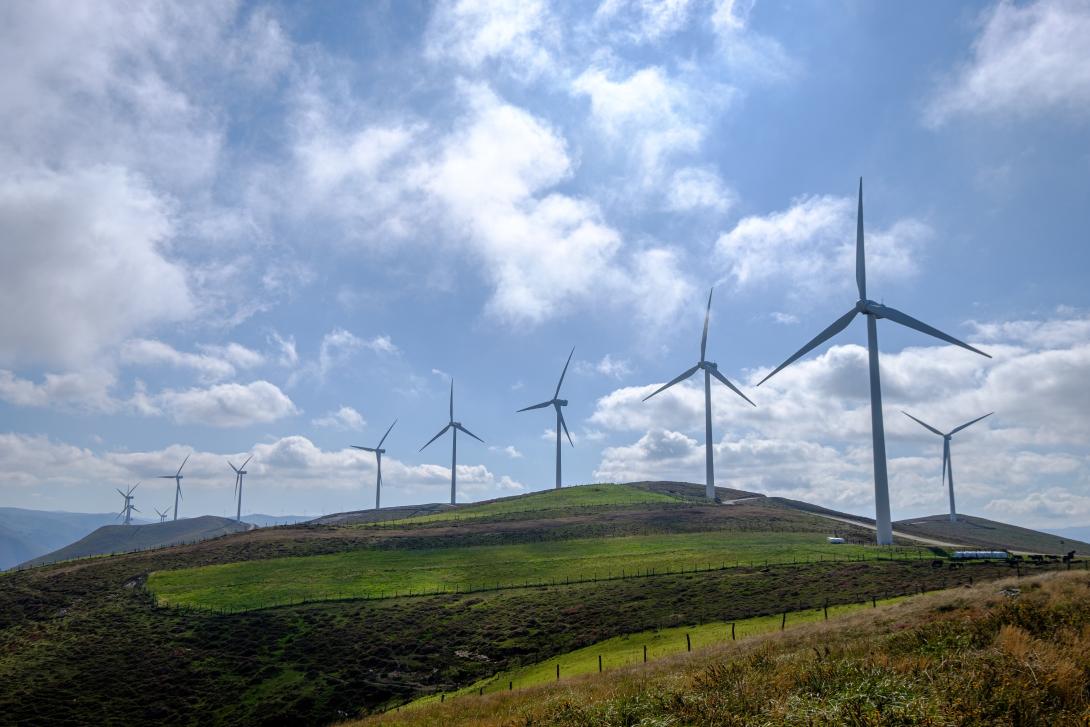
A lawsuit challenging the environmental permit for a wind power generation project might be hindering the transition, but it isn't necessarily regressive. If, for example, it's a megaproject undertaken by a transnational corporation that will export all the energy generated without benefiting local communities, and if it also intends to be located on Indigenous lands without local participation, then it's a project geared toward an "unjust transition" that doesn't serve our needs because it reinforces the very model that has led us down the wrong path.
This type of case is addressed in the report "Litigation for Just Transition in Latin America ," published in January 2023 by the Sabin Center for Climate Change Law at Columbia University, and translated into Spanish by AIDA.
The report questions the purpose of just transition litigation, asking whether it fosters or, conversely, obstructs a climate-resilient energy transition. In this regard, its authors conclude that such litigation cannot be categorized as either regressive or non-regressive in relation to the transition. As such, they consider just transition litigation to be a new category of climate litigation, with its own distinct and unique foundations.
This topic allows us to reflect on the complexity of the long-awaited transition. Faced with these kinds of dilemmas, at AIDA we generally choose to analyze each case individually, without adhering to a dogmatic position. But one constant, and in that sense a valuable starting point, is that everything undertaken in favor of the energy transition—whether projects, policies, or actions—must have a strong and decisive focus on the environment, human rights, and gender equality. Without these, there is no justice; and without justice, there is no remedy or solution.
So we believe that litigation does have a role, not only in making the transition happen, but also in making it fair.
The urgent need to change our energy systems is also an opportunity to build a new system that, unlike the one that reigns today, unites us and is for all people and living beings on the planet.
We will then continue to use the tool of litigation to challenge transition attempts that seek to embroil us in more of the same.
Text written by Florencia Ortúzar Greene - director of the Climate Program of the Inter-American Association for Environmental Defense (AIDA)
Humanity faces an urgent task: transforming energy systems to generate power without continuing to fill the atmosphere with greenhouse gases and pollutants. This is a scientifically proven fact. If we fail to do so, our planet will no longer be a safe haven for humanity or many other species.
The problem is that the necessary transition is far from simple. Besides the difficulty of breaking our dependence on the fossil fuels that have dominated us for centuries, not just any transition will do. It's not simply a matter of ceasing to burn these fuels; we must consider many other factors, even beyond energy, to move away from a development model that for centuries has divided humanity into winners and losers, while also violating human rights.
So what is a Just Transition?
There is currently no single concept of what constitutes a just energy transition. At AIDA, we believe that, to be just, the transition must be equitable and inclusive, recognizing that the impacts of climate change and the necessary transition are not evenly distributed. Thus, certain groups—such as those working in traditional energy sectors and/or marginalized communities—may be disproportionately affected.
To understand the problem, it's worth recognizing that humanity is currently facing several interconnected crises that affect people's lives and well-being, especially those in the most vulnerable situations. The climate emergency, pollution, biodiversity loss, global pandemics, and democratic crises are just some of them. And at the heart of it all is social inequality, the ever-widening gap between rich and poor that creates disparities in every aspect of life, including access to healthcare, education, and economic opportunities.
These crises are interconnected and reinforce each other. Responses to one can help resolve others, but they can also worsen them.
For example, when the transition to clean energy sources not only helps combat climate change but also reduces air pollution and improves public health, we are solving two problems at once. A contrasting example occurs when a rapid and uncontrolled transition to electric mobility results in the aggressive extraction of rare minerals like lithium, which comes from fragile ecosystems on which local communities depend.
So, where do we begin?
To ensure a just transition, we must be guided by the principles of justice, equity, and inclusion, as well as guarantee that the most vulnerable populations are not disproportionately affected.
As Naomi Klein stated in her book This Changes Everything , to address the climate crisis we must understand that climate change is not only an environmental problem, but also a human rights issue. A just energy transition requires not only ending the burning of fossil fuels, but also addressing economic inequality, incorporating a gender perspective, strengthening social safety nets, protecting workers' rights, respecting the rights of Indigenous peoples, empowering communities to participate in decisions that affect their lives, and providing reparations to those affected by the current economic and energy model.
And what role can litigation play?
Litigation is already moving in step with the dilemmas of the energy transition. Thus, we have seen an increase in lawsuits that appear to run counter to the energy transition, such as claims challenging renewable energy generation projects or regulations that favor the transition, or that otherwise hinder it. But can we say that these are always “regressive” lawsuits?
A lawsuit challenging the environmental permit for a wind power generation project might be hindering the transition, but it isn't necessarily regressive. If, for example, it's a megaproject undertaken by a transnational corporation that will export all the energy generated without benefiting local communities, and if it also intends to be located on Indigenous lands without local participation, then it's a project geared toward an "unjust transition" that doesn't serve our needs because it reinforces the very model that has led us down the wrong path.
This type of case is addressed in the report "Litigation for Just Transition in Latin America ," published in January 2023 by the Sabin Center for Climate Change Law at Columbia University, and translated into Spanish by AIDA.
The report questions the purpose of just transition litigation, asking whether it fosters or, conversely, obstructs a climate-resilient energy transition. In this regard, its authors conclude that such litigation cannot be categorized as either regressive or non-regressive in relation to the transition. As such, they consider just transition litigation to be a new category of climate litigation, with its own distinct and unique foundations.
This topic allows us to reflect on the complexity of the long-awaited transition. Faced with these kinds of dilemmas, at AIDA we generally choose to analyze each case individually, without adhering to a dogmatic position. But one constant, and in that sense a valuable starting point, is that everything undertaken in favor of the energy transition—whether projects, policies, or actions—must have a strong and decisive focus on the environment, human rights, and gender equality. Without these, there is no justice; and without justice, there is no remedy or solution.
So we believe that litigation does have a role, not only in making the transition happen, but also in making it fair.
The urgent need to change our energy systems is also an opportunity to build a new system that, unlike the one that reigns today, unites us and is for all people and living beings on the planet.
We will then continue to use the tool of litigation to challenge transition attempts that seek to embroil us in more of the same.
Text written by Florencia Ortúzar Greene - director of the Climate Program of the Inter-American Association for Environmental Defense (AIDA)