
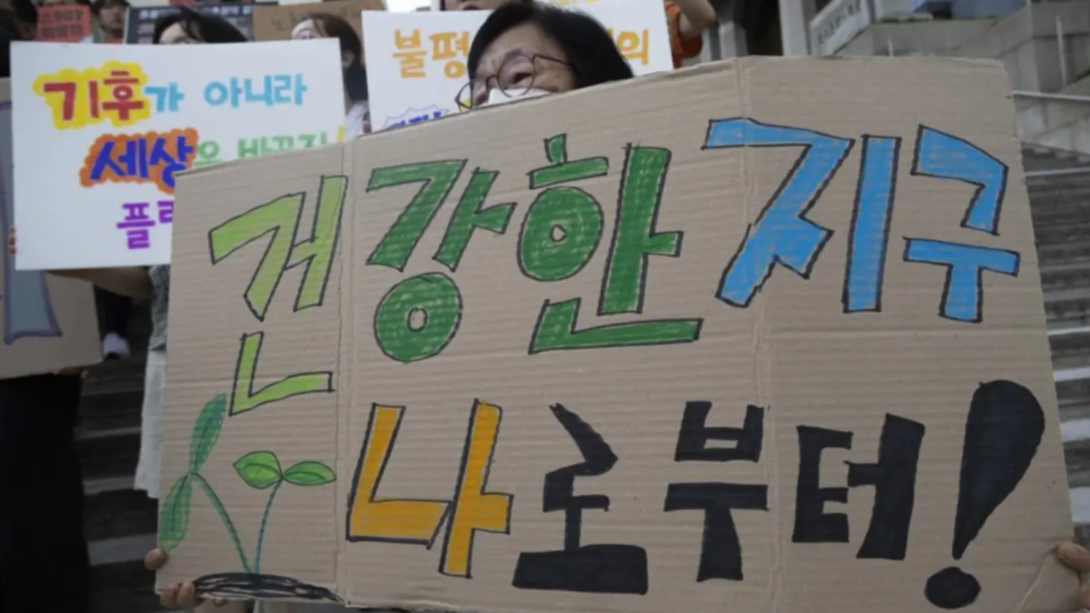
In a landmark ruling, the Constitutional Court of Korea declared parts of the Carbon Neutrality Law unconstitutional because the legislation fails to set greenhouse gas reduction targets beyond 2030, thus shifting the burden of climate action onto future generations. This marks a significant step forward for climate litigation globally, as it is the first time the climate crisis has been recognized as a matter of constitutional rights in the country, and the rights of future generations have been acknowledged.
The decision stems from a case brought by a coalition of young climate activists, including members of the youth environmental organization Youth 4 Climate Action. The plaintiffs argued that the law, by setting the emissions reduction target at 40% by 2030 (rather than 2049), compared to 2018 levels, does not adequately protect their rights or those of future generations. The court concluded that the lack of a more ambitious target violated the state's constitutional duty to protect its citizens from the adverse effects of the climate crisis.
The ruling requires the South Korean government to establish a clear, science-based path to achieving carbon neutrality by 2050. This could involve setting more ambitious targets. The judgment also sends a strong message to other countries around the world: the climate crisis is not just a political or environmental issue, but a human rights matter that courts are increasingly prepared to address.
More information here
In a landmark ruling, the Constitutional Court of Korea declared parts of the Carbon Neutrality Law unconstitutional because the legislation fails to set greenhouse gas reduction targets beyond 2030, thus shifting the burden of climate action onto future generations. This marks a significant step forward for climate litigation globally, as it is the first time the climate crisis has been recognized as a matter of constitutional rights in the country, and the rights of future generations have been acknowledged.
The decision stems from a case brought by a coalition of young climate activists, including members of the youth environmental organization Youth 4 Climate Action. The plaintiffs argued that the law, by setting the emissions reduction target at 40% by 2030 (rather than 2049), compared to 2018 levels, does not adequately protect their rights or those of future generations. The court concluded that the lack of a more ambitious target violated the state's constitutional duty to protect its citizens from the adverse effects of the climate crisis.
The ruling requires the South Korean government to establish a clear, science-based path to achieving carbon neutrality by 2050. This could involve setting more ambitious targets. The judgment also sends a strong message to other countries around the world: the climate crisis is not just a political or environmental issue, but a human rights matter that courts are increasingly prepared to address.
More information here