
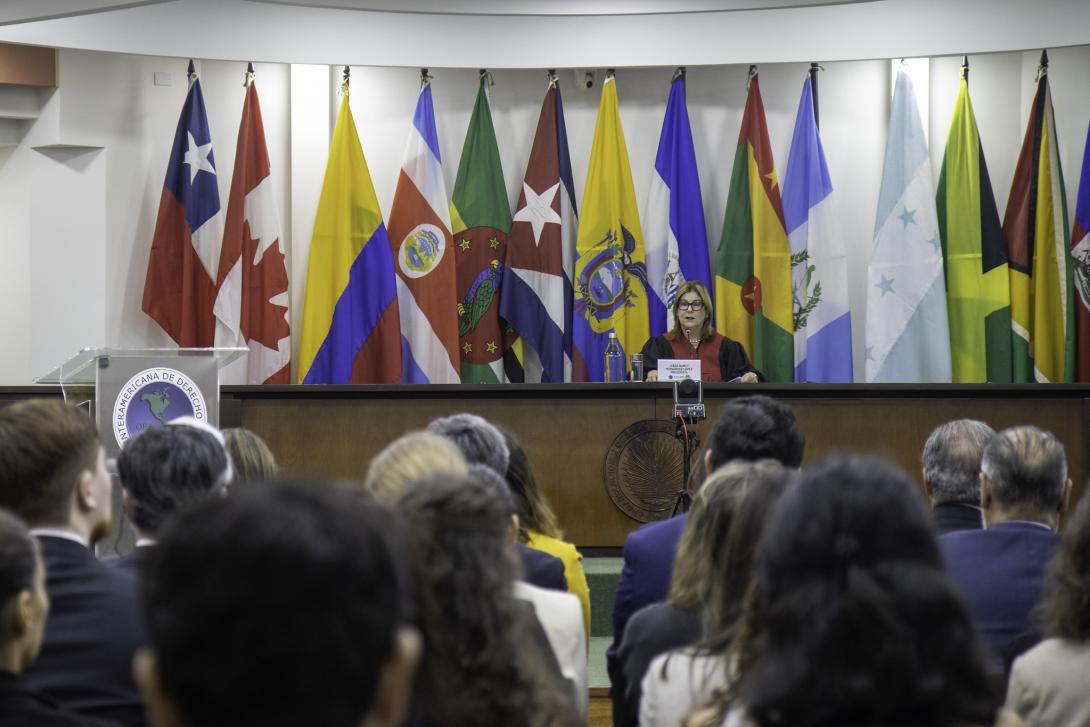
In its Advisory Opinion 32 , the Inter-American Court of Human Rights clarified the legal obligations of States to effectively protect human rights in the face of the climate crisis, setting a key precedent for individuals and communities to access justice, as well as to guide the decisions of national and international courts.
In its ruling —responding to a request made in January 2023 by the States of Colombia and Chile—the Court recognized for the first time the existence of the autonomous right to a healthy climate as part of the right to a healthy environment. This implies that States are obligated, among other things, to guarantee a climate free from dangerous impacts resulting from human activities, ensuring environmental stability for future generations and avoiding imposing disproportionate burdens regarding climate impacts and actions.
Furthermore, the court defined state obligations to provide enhanced protection to groups that suffer the most severe and differentiated impacts of climate change: women, children; Indigenous peoples, Afro-descendant communities, peasant and fishing communities; older persons, persons with disabilities, LGBTIQ+ persons, and human rights defenders, among others. It also clarified the duty of states to strengthen regulation of business activities that generate greenhouse gas emissions.
With this decision, the Inter-American Court becomes the first regional human rights tribunal to broadly and comprehensively define state obligations in the face of the climate emergency. This strengthens and builds upon previous rulings, such as the one issued in 2024 by the International Tribunal for the Law of the Sea, which clarifies state obligations to protect the marine environment from the climate crisis, and the one to be published soon by the International Court of Justice, the UN's highest court, to delineate states' responsibilities in the face of this global emergency.
More information here and here .
In its Advisory Opinion 32 , the Inter-American Court of Human Rights clarified the legal obligations of States to effectively protect human rights in the face of the climate crisis, setting a key precedent for individuals and communities to access justice, as well as to guide the decisions of national and international courts.
In its ruling —responding to a request made in January 2023 by the States of Colombia and Chile—the Court recognized for the first time the existence of the autonomous right to a healthy climate as part of the right to a healthy environment. This implies that States are obligated, among other things, to guarantee a climate free from dangerous impacts resulting from human activities, ensuring environmental stability for future generations and avoiding imposing disproportionate burdens regarding climate impacts and actions.
Furthermore, the court defined state obligations to provide enhanced protection to groups that suffer the most severe and differentiated impacts of climate change: women, children; Indigenous peoples, Afro-descendant communities, peasant and fishing communities; older persons, persons with disabilities, LGBTIQ+ persons, and human rights defenders, among others. It also clarified the duty of states to strengthen regulation of business activities that generate greenhouse gas emissions.
With this decision, the Inter-American Court becomes the first regional human rights tribunal to broadly and comprehensively define state obligations in the face of the climate emergency. This strengthens and builds upon previous rulings, such as the one issued in 2024 by the International Tribunal for the Law of the Sea, which clarifies state obligations to protect the marine environment from the climate crisis, and the one to be published soon by the International Court of Justice, the UN's highest court, to delineate states' responsibilities in the face of this global emergency.
More information here and here .