News

Search for climate litigation news in Latin America and the Caribbean and around the world.

Use the search filters or the keyword search to find the information you need.

Data centers, the emerging focus of global climate litigation

News
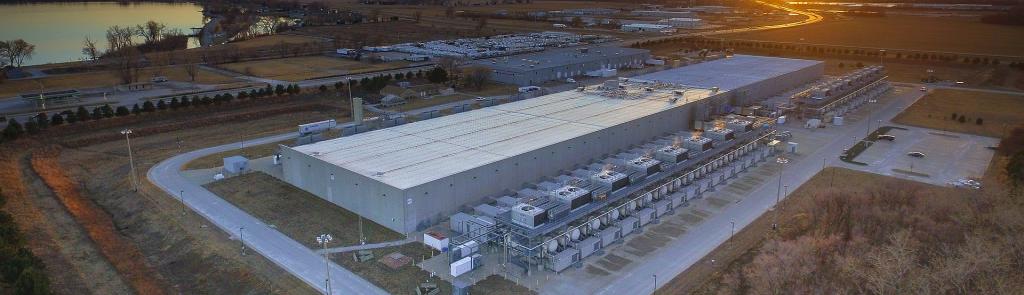
Google data center EUA


Data centers have been identified as a significant new frontier in global climate litigation. This is highlighted in the report “The Global Trends in Climate Change Litigation: 2026 Snapshot,” published by the Grantham Research Institute at the London School of Economics and the Sabin Center for Climate Change Law at Columbia University.


According to the publication, there is a significant increase in lawsuits against data centers, with cases ranging from Chile to Ireland, the United Kingdom, and the United States.


One of the first lawsuits documented in the report occurred in 2020 in Santiago, Chile, when Google planned to build a data center in the Cerrillos area. The plaintiffs challenged the permits granted, arguing the impact on the city's water supply, already affected by drought exacerbated by climate change.


In Europe, the epicenter of these disputes is Ireland, a country whose government is promoting the expansion of the sector and where data centers already consume more than a fifth of the nation's electricity. In the United States, a lawsuit challenging the permitting process for a new data center in California resulted in a settlement in December 2025 that included a commitment to use renewable energy and recycled water to cool the servers.


According to the report, in this litigation pattern, legal actions can drive changes in climate-related decision-making, even without a favorable ruling.


More information here and here .

vea más

Granada: Court finds flaws in the environmental assessment of projects

Alert
Isla de Granada


Grenada Land Actors—a group comprised of organizations, private land users, activists, and independent professionals—sued the Planning and Development Authority of Grenada, an island highly vulnerable to climate change, for approving three large-scale development projects that lacked adequate environmental impact assessments. The High Court of Grenada found the state authority to have acted improperly, setting important precedents for, among other things, the protection of mangroves and protected areas, which are crucial for mitigating climate change in the Caribbean.


More information in the case file , the first of its kind in Granada

vea más

Citizen in Mexico sues government for failing to protect protected natural area

Alert
ciudad de oaxaca


A Zapotec citizen, representing the community of San Bartolo Coyotepec, Oaxaca, filed a lawsuit against municipal, state, and federal authorities in Mexico for failing to protect Benito Juárez National Park (a protected natural area), thereby violating his right to a healthy environment and the territorial rights of his people. The Supreme Court of Justice of the Nation ruled in favor of the plaintiff, invoking progressive instruments such as the Escazú Agreement and Advisory Opinion 32/2025 of the Inter-American Court of Human Rights on the climate emergency.


More information in the case file .

vea más

Costa Rica's top court orders inclusion of climate risks in environmental impact assessments

News
patio de los tribunales costa rica


Costa Rica's Constitutional Court ordered the National Environmental Technical Secretariat (Setena) to incorporate, within 18 months, the analysis of climate impacts —as well as adaptation and mitigation actions— into the environmental impact assessment (EIA) procedures for activities, works and projects.


The ruling responds to an appeal filed by a lawyer and professor of environmental law in which it was argued that there was a violation of the right of present and future generations to enjoy a safe climate as part of the right to a healthy and ecologically balanced environment.


According to the plaintiff, the Environmental Assessment, Control, and Monitoring Regulations (2022) do not include the obligation to assess climate risks and impacts within the EIA procedures. Furthermore, SETENA (the National Environmental Technical Secretariat) has not issued guidelines, agreements, or administrative resolutions to evaluate activities, works, or projects that generate climate risks and impacts. This omission means that the climate variable is not directly assessed and that mitigation or adaptation measures are not required of project developers.


The appeal cites obligations assumed by Costa Rica in international instruments such as the United Nations Framework Convention on Climate Change, the Paris Agreement and the Central American Convention on Climate Change; in addition to jurisprudence from the Inter-American Court of Human Rights, the International Court of Justice, the International Tribunal for the Law of the Sea and the Constitutional Chamber itself.


Learn more here .

vea más

Court suspends gas megaproject and protects whales in the Gulf of California

News
baja california golfo


In response to an injunction filed in September 2025, a Mexican court granted a definitive suspension to the authorization given by the government to the Saguaro project, which seeks to convert an old regasification plant into a liquefied natural gas plant for export by sea from Puerto Libertad, in the Mexican state of Sonora, to Asia.


The decision entails protecting the Gulf of California, one of the most biodiverse marine ecosystems on the planet, home to migratory and resident whales such as the blue, gray, humpback, and fin whales. The implementation of the project by Mexico Pacific Limited would involve more than 600 port calls by enormous vessels each year, concentrated in areas inhabited by whales year-round, increasing the likelihood of serious and fatal collisions for these large cetaceans.


The lawsuit seeking to challenge the project's permits on behalf of the whales was filed by a coalition of organizations. “The entire Saguaro project would generate more than 73 million tons of carbon dioxide per year. That's more than 10% of Mexico's annual emissions!” warns Nora Cabrera, a lawyer and director of Nuestro Futuro, one of the plaintiff organizations, in an interview with El País.


The ruling will remain in effect until a final judgment is issued in the amparo trial, which does not have a specific date.


Learn more here and here .

vea más

Greenpeace will appeal the ruling that orders it to pay USD 345 million for protests against the oil pipeline.

News
greenpeace usa protest


Greenpeace International and Greenpeace USA announced that they will request a new trial and, if necessary, appeal to the Supreme Court of North Dakota, USA, the ruling in which a District Court ordered them to pay USD 345 million in damages to the company Energy Transfer.


The final ruling in the case, issued on February 27 by a North Dakota judge, aligned with a previous decision he issued in October, in which he nearly halved the $667 million compensation that a jury had awarded to the pipeline company in March.


Energy Transfer filed the lawsuit against Greenpeace in 2017, accusing the organization of spreading lies about the Dakota Access project —located near the Standing Rock Sioux Tribe reservation— and of paying protesters to disrupt pipeline construction.


“Reporting companies that harm the environment should never be considered illegal,” said Marco Simons, interim legal advisor for Greenpeace USA and Greenpeace Fund.


More information here and here .


vea más

Climate litigation in Brazil is growing alongside the "Green Package"

Alert
sos mata atlantica protesto ambiental brasil foto midia ninja


Since 2019, various civil society organizations, environmental groups, political parties, and academic institutions have initiated a series of strategic lawsuits in Brazil, primarily before the Supreme Federal Court, to demand the protection of the Amazon and the implementation of climate policies, especially regarding deforestation and air quality. This set of legal actions is known as the “Green Package” or “Green Agenda” ( Pauta Verde in Portuguese).


These lawsuits seek —through the judicial system—the implementation of policies, plans, programs, goals, and commitments, as well as the protection of rights directly related to climate issues. Therefore, they have the potential to align Brazil with international environmental best practices and establish groundbreaking legal precedents throughout the region.


Climate litigation in Brazil has experienced a significant surge, solidifying the country's position as a leader in this type of litigation. The Platform hosts each case of the "Green Package," listed below:


  • Litigation for omissions in the prevention and control of deforestation ( ADO Case 54 ).
  • Litigation over the non-operation of the Climate Fund (Case ADPF 708 ).
  • Litigation concerning the participation of civil society in the National Environmental Fund (Case ADPF 651 ).
  • Litigation over the lack of implementation of a plan to combat deforestation ( ADPF Case 760 ).
  • Litigation over the authorization of the Armed Forces to combat environmental crimes and fire outbreaks (Case ADPF 735 ).
  • Litigation for the repeal of environmental protection measures ( ADPF Cases 747, 748 and 749 ).
  • Litigation over the automatic granting of environmental licenses for medium-risk companies ( ADI Case 6808 ).
  • Litigation for the resumption of the federal environmental sanctions process (Case ADPF 755 ).
  • Litigation for lack of monitoring of deforestation ( ADPF Case 934 ).


vea más
Showing 1 - 10 of 35 results.