News

Search for climate litigation news in Latin America and the Caribbean and around the world.

Use the search filters or the keyword search to find the information you need.

Chile: Supreme Court orders integration of the climate variable into the environmental permit for the Angamos thermoelectric plant

Alert
carbón mineral


In April 2022, the Supreme Court of Justice of Chile ordered the integration of the climate variable into the review process of the Environmental Qualification Resolution (RCA) of the Angamos Thermoelectric Power Plant —which has operated based on the combustion of coal for more than 15 years in Mejillones, Antofagasta Region— because it had not been considered by the authority or by the owner of the project at the beginning of this.


The case dates back to 2020, when people belonging to the Mejillones community requested the Environmental Assessment Service (SEA) of the Antofagasta Region to review the RCA granted to the Angamos thermoelectric plant in 2007. The entity initiated the review process, but only considered variables of the marine environment, without considering the effects on the atmosphere.


The plaintiffs then filed an appeal for protection, which was rejected by the Antofagasta Court of Appeals. This court upheld the SEA's decision, arguing that the RCA (Environmental Qualification Resolution) does not cover matters not considered in the environmental impact assessment process. The case then reached the Supreme Court, whose decision is a major step toward climate justice and a just energy transition in Chile. It allows for anticipating the risks associated with climate change and integrating the commitments made under the Paris Agreement and other international human rights and environmental law treaties into the environmental impact assessments of power generation plants.


More information here

vea más

Colombia's highest court rules that EIAs must include climate impacts

Alert
Medio ambiente colombia Foto: Enrique Hoyos


In response to a lawsuit filed by several civil society organizations and a group of experts in January 2024, the Constitutional Court of Colombia issued a ruling six months later determining that environmental impact assessments (EIAs) “must include an assessment of climate change impacts.” This assessment will be required for environmental license applications or renewals submitted in Colombia from August 1, 2025, onward.

The plaintiffs argued that Article 57 of Law 99 of 1993 (General Environmental Law) was obsolete and unconstitutional because it did not consider the climate crisis as a determining factor when assessing the severity of environmental damage caused by a project, work, or activity. By not including the obligation to examine the climate variable in environmental impact assessments, the law violated constitutional and international law standards.

This is the first lawsuit of its kind in Latin America and the Caribbean. The ruling offers an opportunity to improve environmental impact assessment processes so that countries' economic development is better aligned with climate change mitigation and adaptation standards, providing them with more tools to steer their production toward genuine sustainable development.

More information here

vea más

The biggest climate change case begins at the International Court of Justice

News
corte internacional de justicia onu plenaria


On December 2nd, the International Court of Justice (ICJ), the UN's highest court, began proceedings to examine states' legal obligations in the fight against climate change and subsequently issue a ruling. This is the largest case in the history of the court, based in The Hague, and was initiated by Vanuatu, a small island nation in the South Pacific, which requested an advisory opinion to clarify countries' responsibilities in the face of the climate crisis. The proceedings, which will last two weeks, will involve 110 countries and organizations.


After years of pressure from island nations, which fear disappearing due to rising sea levels, the UN General Assembly requested the ICJ's ruling last year. Vanuatu, responsible for only 0.02% of global greenhouse gas emissions, denounced the climate emergency as threatening its very existence due to the "illegal" conduct of a "small group of" polluting countries.


The Court is expected to issue its ruling next year. Although it is not legally binding, it will carry significant political weight and set the stage for further legal action, including climate litigation at the national level.


Learn more here


vea más

Korean court issues ruling to protect future generations from climate crisis

News
Climate change korea


In a landmark ruling, the Constitutional Court of Korea declared parts of the Carbon Neutrality Law unconstitutional because the legislation fails to set greenhouse gas reduction targets beyond 2030, thus shifting the burden of climate action onto future generations. This marks a significant step forward for climate litigation globally, as it is the first time the climate crisis has been recognized as a matter of constitutional rights in the country, and the rights of future generations have been acknowledged.


The decision stems from a case brought by a coalition of young climate activists, including members of the youth environmental organization Youth 4 Climate Action. The plaintiffs argued that the law, by setting the emissions reduction target at 40% by 2030 (rather than 2049), compared to 2018 levels, does not adequately protect their rights or those of future generations. The court concluded that the lack of a more ambitious target violated the state's constitutional duty to protect its citizens from the adverse effects of the climate crisis.


The ruling requires the South Korean government to establish a clear, science-based path to achieving carbon neutrality by 2050. This could involve setting more ambitious targets. The judgment also sends a strong message to other countries around the world: the climate crisis is not just a political or environmental issue, but a human rights matter that courts are increasingly prepared to address.


More information here


vea más

Brazilian prosecutors are seeking to calculate the cost of deforestation in order to collect it in court.

News
Deforestamiento amazonia


The Brazilian Association of Environmental Public Prosecutors and the Amazon Environmental Research Institute (IPAM) have proposed guidelines for calculating the carbon cost of carbon released into the atmosphere by deforestation and forest fires. This calculation, currently an obstacle in the Brazilian judicial system due to the lack of a standardized process, will provide a scientific basis for more effectively holding those responsible for this damage accountable in court.


The proposal includes the use of an online calculator developed by IPAM that determines the amount of carbon stored in the vegetation of a given area. According to the guidelines, the financial value is obtained from a ratio of $5 per ton of carbon dioxide emitted by deforestation, a quantification established by the Amazon Fund and the only parameter adopted to date by the Brazilian government as a carbon price.


Given that climate damage caused by forest fires or logging requires complex assessment, the proposed calculation will help the Federal Public Prosecutor's Office and state prosecutors to demand compensation for these environmental impacts, and even has the potential to deter new illegal practices of native forest destruction.


Learn more here


vea más

Climate Litigation Platform Bulletin - 3rd edition

News
Boletín PLC


News

The amicus curiae and its role in climate litigation

An amicus curiae ("friend of the court") is a legal brief that can be a valuable tool for resolving climate disputes more effectively. Let us explain.

Learn more


The NDC update is an opportunity to push for more

Next year, countries that signed the Paris Agreement must update their Nationally Determined Contributions (or NDCs) with targets for 2030 and 2035.

Learn more


Brazilian court fines rancher USD 50 million for deforesting the Amazon

A person was found guilty of illegally deforesting the Amazon rainforest and causing the release of 901,600 tons of carbon dioxide into the atmosphere.

Learn more


New climate litigation in the region

Citizens vs. environmental authority over the expansion of the port of Veracruz in Mexico

In 2016, two citizens of Veracruz, Mexico, filed a lawsuit against the Ministry of Environment and Natural Resources for the authorization of the expansion works of the port of Veracruz, alleging the violation of the right to a healthy environment due to the impact on the Veracruz Reef System National Park, a protected natural area, and other reefs in the area not officially identified.


> CSOs vs. Colombian government over environmental licenses without consideration of the climate crisis

Civil society organizations (CSOs) that defend the environment and a group of experts filed a lawsuit before the Constitutional Court of Colombia, arguing that Article 57 of Law 99 of 1993 was obsolete because it did not consider the climate crisis as a determining factor when conducting environmental impact assessments, thus failing to comply with constitutional and international law standards.


Mejillones Community vs. Environmental Assessment Service of Antofagasta (Chile)

Residents of the Mejillones community in Antofagasta, Chile, requested that the Environmental Assessment Service review the Environmental Qualification Resolution (RCA) granted in 2007 for the Angamos thermoelectric plant. After receiving a negative response, they filed an appeal for protection, which was resolved in April 2022 by the Supreme Court, ordering the integration of climate variables into the RCA review process.


Publications of interest

The 2024 state of the climate report: Perilous times on planet Earth (William J. Ripple et. al.).

Situating Held v. Montana in the Youth Climate Litigation Movement (Daniel Ziebarth).

Situation of human rights defenders, report by the UN Special Rapporteur on the situation of human rights defenders, Mary Lawlor.

Research Areas for Climate Litigation (Delta Merner, Carly Phillips and Kathy Mulvey).

Implementing the Inflation Reduction Act: Progress to Date and Risks from a Future Hostile Administration (Romany Webb, Martin Lockman and Emma Shumway).


Events and calls for proposals

Call for contributions: Oceans and human rights

Purpose: To contribute to the thematic report on oceans and human rights by the UN Special Rapporteur on the human right to a clean, healthy and sustainable environment, to be presented at the 58th session of the UN Human Rights Council in 2025.

Deadline: October 30, 2024


Would you like to receive the PLC newsletter? Subscribe   here


To provide information on new cases not included on the platform or to offer updates or corrections to cases already included, use this form .


For any comments, contributions, or suggestions regarding this newsletter or the platform, please write to plc@aida-americas.org

vea más

Brazilian court fines rancher $50 million for deforesting the Amazon and causing climate damage

News
Deforestamiento amazonia


In a ruling issued on July 18, 2024, a federal court in Brazil sentenced cattle rancher Dirceu Kruger to pay a fine of USD 50 million after finding him guilty of illegally deforesting the Amazon —using methods such as chainsaws and forest fires— and thereby causing the release of 901,600 tons of carbon dioxide into the atmosphere, which the damaged rainforest can no longer absorb, thus aggravating the climate crisis.


The decision stems from a lawsuit filed in September 2023 by the Brazilian Institute of the Environment. The case is landmark for addressing the climate damage caused by deforestation and for its verdict ordering exemplary measures for the destruction of the Amazon rainforest and other biomes.


In addition to the multimillion-dollar fine, the court ordered Kruger to restore the degraded area and imposed various restrictions, such as a ban on receiving government funding, selling livestock, or acquiring machinery.


More information:here and here .


vea más

Advisory Opinion: The protection of human rights in the face of the climate emergency at the Inter-American Court of Human Rights

Blog
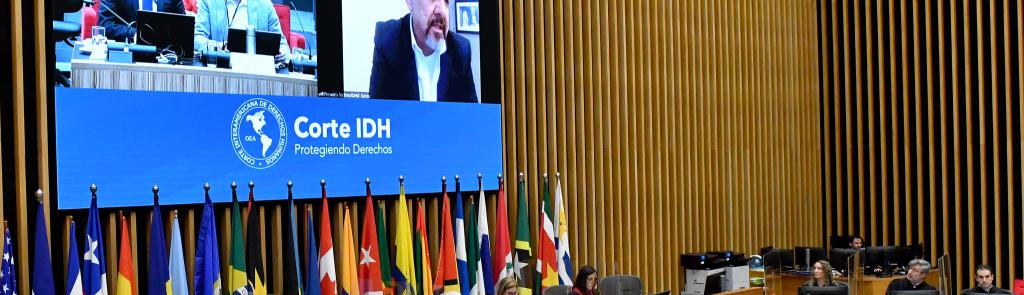
Corte Interamericana de Direitos Humanos - Caso García Rodríguez y Reyes Alzipar Vs. México. Local: Superior Tribunal de Justiça Brasil


The climate crisis is considered the most urgent problem facing humanity and the greatest threat to human rights.


In that context, what obligations do States have to protect people, especially those in vulnerable situations, from the impacts of the climate crisis?


The advisory opinions of the Inter-American Court of Human Rights offer a powerful answer to that question, as their objective is to clarify the content and scope of the obligations to protect human rights that the States of the continent have, in accordance with their internal laws and with the treaties or conventions they have signed.


Currently, the international court is in the process of issuing an advisory opinion to clarify these obligations, specifically in the face of the climate crisis.


The interpretations that the Court offers in this case will strengthen the arguments used by organizations, communities and other actors who decide to initiate climate litigation before national or international courts.


For the reasons described above, it is important to explain what advisory opinions are, why they are important and what their relationship is to climate litigation, as well as to detail the ongoing advisory opinion process and its potential for achieving climate justice.


WHAT ARE THE ADVISORY OPINIONS OF THE INTER-AMERICAN COURT OF HUMAN RIGHTS?


The advisory opinions of the Inter-American Court are pronouncements made by this international tribunal —at the request of both the members of the Organization of American States (OAS) and some affiliated bodies— in order to interpret international treaties such as the American Convention on Human Rights and clarify their scope, determine the specific obligations they impose, and develop the guarantees they provide to the inhabitants of the continent.


They are important because they solidify the proper understanding of human rights and thereby guide States on how to guarantee and implement them within their territories or jurisdictions. A clear example is Advisory Opinion 23 of 2017, in which the Court established a historic precedent by recognizing the right to a healthy environment as fundamental to human existence and ruling for the first time on its content.


These pronouncements help to clarify the duties, authorizations, and prohibitions that arise from each of the rights recognized in the international treaties signed by the countries of the continent. Therefore, they constitute a relevant element in establishing the responsibility of any State for possible human rights violations resulting from its actions or omissions.


WHAT IS THE PROCESS BY WHICH ADVISORY OPINIONS ARE ISSUED?


Any member of the OAS or any of its constituent institutions may request an advisory opinion from the Inter-American Court of Human Rights on how its clauses or those of "other treaties concerning the protection of human rights" in the Americas should be interpreted. The questions must be specific and include their justification.


Once the consultation is received, the Court informs all member states and bodies of the Inter-American Human Rights System so that they may submit their written observations. At the same time, a period is opened for any interested person or entity to submit to the Court their considerations regarding the questions raised and how they should be resolved.


Then, if it deems it necessary, the Court convenes oral hearings to hear from the States and other parties involved in the proceedings. It may also ask questions and request clarifications regarding the documents it has received. Following this, the Court deliberates privately on the matter and adopts its decision, which will be notified by its registry to all those who participated in the proceedings.


HOW DO ADVISORY OPINIONS CONTRIBUTE TO CLIMATE LITIGATION?


Climate litigation has become a key and increasingly used tool in the fight against the climate crisis. It is essentially strategic litigation that seeks broad societal change through court decisions that hold governments, corporations, and other actors accountable for the causes and impacts of the climate crisis.


The Inter-American Court's advisory opinions can contribute to achieving these rulings by offering authoritative interpretations of the human rights treaties adopted by the States of the region. They serve as a legal benchmark for judging the actions or omissions of State entities and private actors under their control that have aggravated or threaten to aggravate the climate crisis.


Treaties such as the American Convention on Human Rights establish guarantees for a dignified life, personal integrity, and health, which can be invoked before courts as the basis for States' obligations to adopt measures to adapt to and mitigate the climate crisis. Thus, advisory opinions provide strong arguments for demanding compliance with such measures as a way to protect human rights.


View this post on Instagram

A post shared by AIDA 🌎⚖️ (@aida_ambiente)

OPPORTUNITIES OF THE ONGOING ADVISORY OPINION FOR CLIMATE JUSTICE


In January 2023, Colombia and Chile requested an advisory opinion from the Inter-American Court of Human Rights to clarify the scope of state obligations regarding human rights in the context of the climate emergency. Both states stated that their populations, and others across the continent, are suffering the consequences of the global crisis, particularly due to droughts, floods, and fires, among other factors. Therefore, they consider it necessary for the Court to determine the appropriate interpretation of the American Convention on Human Rights and the rights recognized therein "insofar as they are relevant to addressing the situations generated by the climate emergency, its causes, and consequences."


This will be the first time the international court has ruled to determine the mandates, prohibitions, and authorizations that must be inferred from human rights in relation specifically to the negative effects of the climate emergency on individuals and communities on the continent.


Once issued, this advisory opinion will clarify the legal obligations of Latin American states to combat the climate crisis as a human rights issue. The Court's ruling could compel states to recognize their responsibility to reduce greenhouse gas emissions, support adaptation measures, and establish mechanisms to address the resulting losses and damages.


Given this unique opportunity, AIDA is participating in the public consultation convened by the Court before issuing its ruling. We have submitted a legal brief with arguments demonstrating the existence of the autonomous human right to a "stable and safe climate" as part of the universal right to a healthy environment, as well as the corresponding obligations of States to prevent and avoid the harmful effects of the climate emergency on their inhabitants.


In addition, we are supporting different communities in the region to bring their voices to the process and be heard by the Court by submitting other legal documents that emphasize the socio-environmental impacts of the climate emergency on indigenous peoples, women, children, populations with diverse gender orientations and identities, and on fragile ecosystems such as coral reefs.


We are also supporting the participation of community representatives in the hearings of the process, scheduled by the Court for April and May in Barbados and Brazil, respectively.


The climate justice movement in Latin America and around the world is becoming stronger and more effective, fueled by the successes of climate litigation and by key precedents such as those emerging from the advisory opinions of the Inter-American Court of Human Rights.


Author: Manuel Páez Ramírez is Colombian and a lawyer with the Human Rights and Environment Program at AIDA.

vea más

California seeks to have oil companies forfeit profits from false advertising about climate change

News
Plataforma de petroloeo en altamar


The California attorney general recently filed an amendment to the lawsuit against five of the world's largest oil companies, seeking to force them to forfeit profits made while denying the link between the fossil fuel industry and climate change—including their own role in the global crisis—through deceptive advertising.


The request for “return of profits” was added to a lawsuit filed in September 2023 against Exxon Mobil, Chevron, Shell, BP, ConocoPhillips, and the American Petroleum Institute (the industry’s leading trade association). Filed in a San Francisco state court, the lawsuit alleges that the energy giants have caused tens of billions of dollars in damages by misleading the public.


Read more here


vea más

United Kingdom: The future impacts of fossil mining must be assessed

News
Personas en protesta en la suprema corte inglesa


In a recent ruling, the UK Supreme Court established that the indirect impacts of fossil fuel extraction—including greenhouse gas emissions from their eventual combustion—must be included in the environmental impact assessment of projects before they are authorized. The decision has the potential to reshape the industry landscape in the country, casting doubt on current and future projects.


With this ruling, the high court resolved the lawsuit brought by activist Sarah Finch, on behalf of the Weald Action Group, challenging the Surrey County Council's authorization to expand an oil well in Horse Hill, Weald, in southeast England. The court ruled that the Council acted unlawfully by failing to consider the project's negative impacts on the climate, both now and in the future.


Finch argued that the environmental impact assessment carried out by the Council did not take into account the climate impacts that would inevitably occur from burning the extracted oil, which would result in more than 10 million tons of carbon emissions.


Read more here and here


vea más
Showing 41 - 50 of 66 results.